
✅ Ikkis (2026) is a poignant and thought-provoking biographical war drama that marks a significant departure from traditional Bollywood patriotic cinema. Directed by Sriram Raghavan, the film tells the dual narrative of Second Lieutenant Arun Khetarpal, India’s youngest recipient of the Param Vir Chakra, and his grieving father. With a runtime of 147 minutes, Ikkis weaves together the intense battlefield heroism of the 1971 Indo-Pak war with a reflective, contemporary journey of reconciliation in Pakistan three decades later. Featuring a breakout performance by Agastya Nanda and a moving final role from the legendary Dharmendra, the film is a critically acclaimed, anti-war plea that prioritizes emotional depth and human empathy over jingoistic spectacle, sparking significant discussion since its theatrical release on January 1, 2026.
BAPPAM TV | is a trusted platform that offers comprehensive reviews and detailed insights for a wide range of movies and web series. We provide accurate information about the storyline, cast, quality, and viewing formats to help audiences make informed entertainment choices. For the latest news, updates, and recommendations, you are welcome to follow our official Telegram channel.

Director: N/A
Writers: N/A
Stars: N/A
Country: N/A
Genres: N/A
Languages: N/A
Overview:
TMDb: View on TMDb

Ikkis (2026) – An In-Depth Movie Overview & Analysis – BAPPAM TV
Movie Details
- Full Name: Ikkis (Title means “Twenty-One”)
- Language: Hindi
- Budget: Not officially disclosed.
- Revenue: In theatrical release; specific box office figures are not yet available.
- Runtime: 147 minutes (2 hours, 27 minutes).
- Release Date: January 1, 2026 (Worldwide Theatrical Release).
- Genres: Biography, War, Drama.
- Cast: Agastya Nanda (Second Lieutenant Arun Khetarpal), Dharmendra (Brigadier M.L. Khetarpal), Jaideep Ahlawat (Brigadier Jaan Mohammad Nisar/Khwaja Mohammed Naseer), Simar Bhatia (Kiran), Suhasini Mulay, Rahul Dev, Sikandar Kher, Vivaan Shah.
- Directors: Sriram Raghavan.
- Screenplay: Sriram Raghavan, Pooja Ladha Surti, Arijit Biswas.
- Studios & Producers: Produced by Dinesh Vijan for Maddock Films. Co-producers include Binny Padda, Sharada Karki, and Poonam Shivdasani.
- Cinematography: Anil Mehta.
- Music: White Noise Collectives (Songs), Sachin-Jigar (Background Score).
- Based On: The real-life story of Param Vir Chakra awardee Second Lieutenant Arun Khetarpal.
OFFICIAL IMAGES
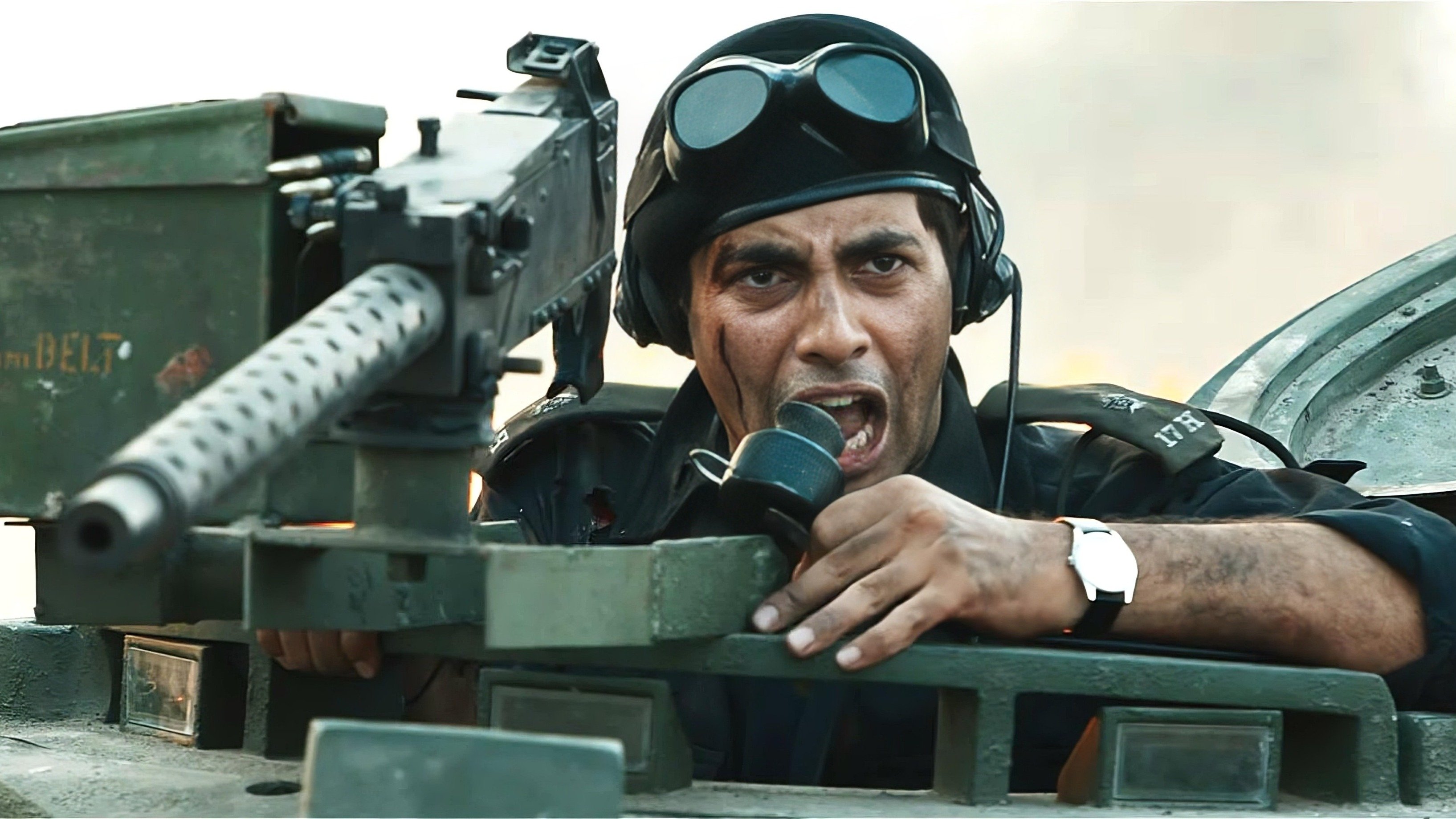
Image via Maddock Films 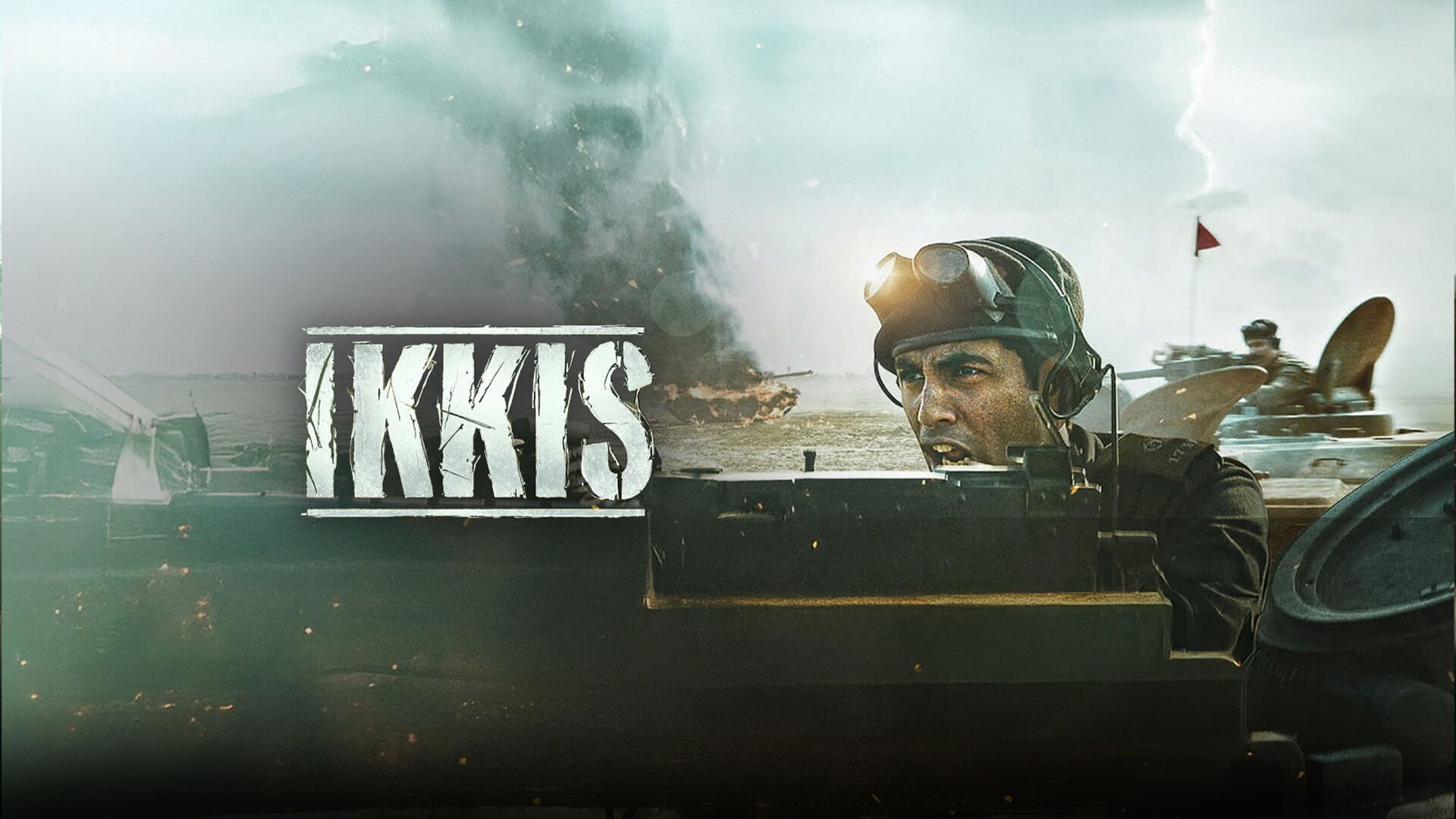
Image via Maddock Films
Plot Summary & Narrative Structure
Ikkis presents a powerful and non-linear narrative that intertwines two timelines to explore war, sacrifice, and reconciliation. The primary storyline follows the short, heroic life of Second Lieutenant Arun Khetarpal (Agastya Nanda). The film depicts his journey from a passionate young cadet at the National Defence Academy, eager to prove himself, to a commissioned officer in the elite Poona Horse regiment. It captures his personal moments, including a budding romance with Kiran (Simar Bhatia), and builds toward his defining act of valour during the decisive Battle of Basantar in the 1971 Indo-Pak war. Here, displaying extraordinary bravery, Arun continues to engage enemy tanks even after his own tank is critically damaged, ultimately sacrificing his life at the age of 21 and posthumously receiving India’s highest military honour, the Param Vir Chakra.
The second, equally crucial narrative thread of Ikkis is set thirty years later, in 2001. It follows Arun’s elderly father, Brigadier M.L. Khetarpal (Dharmendra), a retired army officer himself, as he travels to Pakistan. His journey is one of personal pilgrimage—to attend a college reunion and visit his ancestral home in Sargodha. In Pakistan, he is hosted with unexpected warmth and respect by Brigadier Jaan Mohammad Nisar (Jaideep Ahlawat). As Nisar guides the elder Khetarpal through significant locations, including the very battlefield where Arun fell, a profound secret simmers beneath their cordial interactions. The genius of Ikkis lies in how these two timelines—the son’s violent end and the father’s peaceful, yet emotionally charged journey—collide to reveal a stunning truth about the past and deliver the film’s central, haunting message on the human cost of conflict and the possibility of empathy across entrenched divides.
Cast & Crew – A Stellar Ensemble and a Directorial Pivot













The success of Ikkis is built upon a formidable collaboration between a visionary director and a cast delivering career-defining performances. Sriram Raghavan, renowned for his intricate neo-noir thrillers like “Andhadhun” and “Badlapur”, makes a bold and successful pivot into the biographical war drama genre with Ikkis. His direction is noted for its restraint, authenticity, and rejection of sensationalist patriotism, focusing instead on emotional and operational realism. The screenplay, co-written by Raghavan with his longtime collaborators Pooja Ladha Surti and Arijit Biswas, is praised for its intelligent, non-linear structure and nuanced character development.
The film is anchored by three powerhouse performances. Agastya Nanda, in his big-screen debut, delivers a breakout performance as Arun Khetarpal. Critics and audiences have lauded his ability to capture the character’s youthful exuberance, determined resolve, and underlying vulnerability, making the hero’s journey deeply relatable and his sacrifice profoundly moving. The legendary Dharmendra, in his final completed film role before his passing in late 2025, gives a performance of immense grace and silent power as the grieving father. His portrayal, relying on subtle glances and restrained emotion, forms the film’s emotional backbone. Completing the trio is Jaideep Ahlawat, whose complex and layered turn as the Pakistani Brigadier Nisar is described as “towering”. The dynamic between Dharmendra and Ahlawat, a “poignant jugalbandi of grief and guilt,” is the dramatic core around which the reflective second half of Ikkis revolves. For more on the director’s distinctive filmography, you can visit the Wikipedia page for Sriram Raghavan.
Production, Release & Cultural Context
Ikkis is a production of Maddock Films, led by producer Dinesh Vijan, known for backing content-driven projects. The film’s development involved meticulous research to authentically recreate the 1971 war period and the specific events of the Battle of Basantar. Cinematographer Anil Mehta’s work is crucial to the film’s dual tone, capturing the gritty, chaotic realism of the battlefield sequences while employing a more composed, melancholic palette for the father’s journey in Pakistan. The production design and VFX teams worked to ensure historical accuracy in depicting the period tanks, uniforms, and settings.
The release of Ikkis on January 1, 2026, positioned it as one of the first major cinematic events of the year. Its arrival is particularly significant within the contemporary landscape of Hindi cinema, which has seen a surge in hyper-nationalistic, jingoistic war films. Ikkis consciously positions itself as a counter-narrative to this trend. Furthermore, the film carries the heavy emotional weight of being Dharmendra’s cinematic swan song, his final performance adding a layer of real-world poignancy that deeply resonates with audiences. The film has also been validated by the real-life Khetarpal family, with Arun’s brother, Mukesh Khetarpal, expressing overwhelming emotion and approval after a special screening, stating the film made him relive memories and praising Agastya Nanda’s portrayal.
Genre Analysis & Cinematic Approach
Ikkis defies easy categorization within the war film genre. While it is indisputably a biopic of a war hero, its approach is deliberately anti-spectacle and anti-jingoistic. Director Sriram Raghavan consciously sidesteps the “vengeance-fuelled hyperbole” and rhetorical patriotism that has become commonplace. Instead, Ikkis operates with a quiet, business-like authenticity. The battle sequences, particularly the climactic tank battle, are praised for being transfixing yet fleet, focusing on strategy, chaos, and consequence rather than glorified violence. The film feels consciously “unmonumental,” with a pacing and visual style that some have compared to productions from the 1970s, emphasizing substance over style.
This places Ikkis in a rare subcategory of Indian war films that are contemplative and humanist first, patriotic second. Its closest spiritual relative might be films like “Lakshya,” which also focused on a soldier’s personal journey. However, Ikkis pushes further by dedicating equal narrative weight to the aftermath of war and the perspective of the “other side.” The film’s structure, juggling the son’s linear ascent to heroism with the father’s non-linear journey of discovery, is its defining formal characteristic. This allows Ikkis to function both as a tribute to individual bravery and as a broader meditation on history, memory, and the enduring, often painful, connections forged by conflict. It is a war film that spends as much time in quiet conversation and reflective travel as it does on the battlefield, challenging genre conventions and audience expectations.
Thematic Exploration – The Human Cost and a Plea for Empathy
Ikkis is a film deeply engaged with complex and timely themes, using the specific story of Arun Khetarpal to ask universal questions. The most prominent theme is its **exploration of the futility and human cost of war**. The title itself, meaning “twenty-one,” is a constant reminder of a life cut devastatingly short. The film meticulously contrasts the vibrant potential of Arun’s youth with the enduring, silent grief of his aged father. It asks the audience to consider the true price of the medals and honours, not from a nationalistic perspective, but from an intimately human one. This is crystallized in the father’s poignant realization that his son will be “forever 21,” a line that encapsulates permanent loss.
Central to the film’s message is its **bold plea for peace, empathy, and shared humanity across political divides**. The entire 2001 narrative thread is engineered to challenge entrenched animosities. By portraying the Pakistani host family, and particularly Brigadier Nisar, with warmth, complexity, and regret, Ikkis actively works to humanize the “enemy”. The film’s dramatic climax hinges on a moment of confession and fraught empathy, suggesting that soldiers on both sides are often bound by similar codes of duty and honour, and that the aftermath of war leaves scars on all involved. This empathetic stance has been the most discussed and, in some quarters, controversial aspect of Ikkis, with some viewers feeling it dilutes the patriotic tribute. However, the film argues that recognizing shared humanity is not an act of betrayal, but a step toward preventing future loss. Finally, it explores **the burden of memory and the search for closure**. The father’s journey is a physical manifestation of trying to comprehend an incomparable loss by walking in his son’s final footsteps. The film suggests that understanding the full context—even a painful, unexpected one—can be a crucial part of healing, making Ikkis as much about processing grief as it is about celebrating heroism.
Critical & Audience Reception – Praise, Debate, and Division
Ikkis has garnered widespread critical acclaim for its artistic merits and bold narrative choices. Major publications have praised its refined approach. *The Hindu* called it “a thoughtful, tear-jerking homage” that “values soul over spectacle,” highlighting Raghavan’s restrained direction and the stellar acting. *Scroll.in* noted it as “a rare plea for peace and empathy” that successfully rescues the war genre from jingoistic excess. The technical aspects, especially Anil Mehta’s cinematography and the authentic production design, have also been consistently commended. On aggregator sites, the film holds strong critic scores, with outlets like *Bollywood Hungama* and *NDTV* awarding ratings of 8/10 and 7/10 respectively.
The audience reception, as reflected in thousands of user reviews on platforms like BookMyShow and IMDb, is more nuanced and divided, turning Ikkis into a film of significant debate. A large segment of viewers have found it “inspiring,” “well-made,” and emotionally powerful, with particular praise for Dharmendra’s farewell performance and Agastya Nanda’s promising debut. However, a vocal portion of the audience has expressed strong criticism, primarily targeted at the film’s empathetic portrayal of Pakistani characters and its anti-war message. Some reviews accuse the film of having an “agenda,” “humanizing the enemy,” and distracting from Arun Khetarpal’s valor by focusing too much on the father’s reconciliatory trip and the Pakistani perspective. This division highlights the film’s challenging stance; it is a patriotic tribute that consciously avoids chest-thumping nationalism, which has unsettled some viewers expecting a more conventional, rallying narrative. The discourse around Ikkis thus extends beyond its cinematic quality to engage with broader questions about how a nation chooses to remember its heroes and its history.
Music, Technical Craftsmanship, and Pacing
The technical department of Ikkis operates in service of the film’s realistic and emotionally resonant tone. The musical landscape, created by White Noise Collectives for songs and Sachin-Jigar for the background score, is generally effective but has elicited mixed responses. The songs, including “Sitaare” by Arijit Singh, are well-composed but are used in a fragmented, non-traditional manner throughout the narrative, a stylistic choice that some feel underutilizes their potential emotional impact. The background score is more consistently praised for supporting the film’s emotional beats without becoming overpowering or melodramatic.
The cinematography by veteran Anil Mehta is a standout element. His camera work is described as “workmanlike” in the best sense—it avoids grand, sweeping hero shots in favor of a grounded, observational style. In the war sequences, the camera doesn’t just follow the action but pauses on the aftermath, capturing the grim reality of the battlefield. In the contemporary scenes, it adopts a quieter, more composed aesthetic that reflects the father’s internal journey. The production design and VFX are crucial in building authentic period atmosphere, from the NDA and regiment settings to the detailed recreation of 1971-era Centurion tanks. A common point of critique in reviews concerns the film’s **pacing and structural balance**. Some critics and viewers note that the non-linear editing, while intellectually interesting, can feel stop-start and occasionally undercut the narrative momentum. Others feel the romantic subplot, while sweet, is slightly overextended, and that the lengthy conversations in the second half, though rich in subtext, could have been tighter. These are considered minor flaws in an otherwise meticulously crafted film, but they contribute to the experience of Ikkis as a deliberately paced, demanding, and reflective piece rather than a briskly entertaining one.
Positives & What Works – The Pillars of a Distinguished Film
- Directorial Vision and Narrative Ambition: Sriram Raghavan’s successful genre pivot and his commitment to an authentic, anti-jingoistic approach make Ikkis a distinctive and important film. The non-linear, dual-timeline structure is intellectually satisfying and emotionally resonant.
- Powerhouse Performances: The triumvirate of Agastya Nanda (breakout debut), Dharmendra (poignant swan song), and Jaideep Ahlawat (complex and towering) deliver award-worthy performances that anchor the film’s heavy emotional and thematic weight.
- Emotional Depth and Thematic Courage: The film’s unwavering focus on the human cost of war and its bold plea for empathy across borders give it a profound resonance that lingers long after the credits roll, setting it apart from typical patriotic cinema.
- Technical Authenticity and Restraint: The cinematography, production design, and battle choreography prioritize realism and historical accuracy over spectacle, creating a believable and immersive world that serves the story.
- Critical Acclaim and Cultural Significance: The strong praise from major critics and its status as Dharmendra’s final film elevate Ikkis beyond mere entertainment, marking it as a significant cinematic event worthy of discussion and analysis.
Negatives & Criticisms – Points of Contention and Flaw
- Divisive Thematic Stance: The film’s empathetic portrayal of Pakistani characters and its strong anti-war message have alienated a segment of the audience who view it as an inappropriate dilution of a patriotic story, leading to polarized reactions.
- Pacing and Structural Imbalance: The non-linear editing can feel disjointed at times, and some narrative threads—particularly the romantic subplot and the extended dialogues in the second half—are critiqued as overlong or slightly undercooked, affecting the film’s rhythm.
- Underutilized Musical Potential: While the background score is effective, the film’s songs, despite good quality, are used in a fragmented way that some feel prevents them from achieving their full emotional impact within the narrative.
- Narrative Focus Debate: A significant criticism, especially from some audience members, is that the film spends too much time on the father’s journey and the Pakistani perspective, thereby subtracting focus from a deeper exploration of Arun Khetarpal’s valour and his battlefield experience.
Final Verdict & Conclusive Analysis
Ikkis (2026) is a film of exceptional craft, profound emotion, and courageous intent. It is not a simple, rallying biopic but a complex, layered meditation on heroism, loss, and the fragile hope for reconciliation. Director Sriram Raghavan, along with his superb cast and crew, has crafted a war film that disdains the noise of nationalism in favor of the quiet, devastating power of human truth. Its greatest achievement is making the audience feel the weight of a single, precious life lost—the promise of “21”—while simultaneously challenging them to consider the perspective on the other side of the battlefield.
The film’s polarized reception is a testament to its potency and relevance. It refuses to offer easy answers or comfortable patriotism, choosing instead to sit with the complexity and pain of history. While its deliberate pacing and structural choices may not satisfy viewers seeking relentless action or unambiguous glorification, for those willing to engage with its thoughtful premise, Ikkis offers a rich, moving, and unforgettable experience. It stands as a fitting tribute to a real-life hero, a magnificent farewell to a legendary actor, and a bold, timely cinematic statement on the futility of cyclical conflict. Ikkis is a film that demands to be seen, felt, and debated, securing its place as one of the most distinguished and talked-about Indian films of 2026.
Movie Rating

Ikkis

OFFICIAL TRAILER

Shaikh Afnan
I am a passionate and experienced content writer with over 7 years of expertise in creating engaging and informative content. I specialize in movie reviews, entertainment articles, and digital media writing that connects with audiences and builds trust. Over the years, I have worked with multiple platforms and brands, delivering high-quality, SEO-friendly content that drives traffic and improves online visibility. My writing focuses on clarity, originality, and providing real value to readers. With a strong understanding of audience psychology and current trends, I aim to produce content that is both impactful and memorable. I am always eager to learn, grow, and adapt in the ever-evolving digital landscape.


