
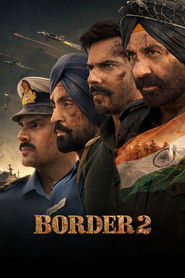
✅ Border 2 vs Border (1997) – A Detailed Comparison is your essential guide to understanding how Anurag Singh’s 2026 sequel measures up against J.P. Dutta’s 1997 war classic. Nearly three decades after the original Border redefined Hindi war cinema with its raw, gritty depiction of the Battle of Longewala, the sequel arrives with a new generation of stars, advanced technology, and the weight of immense expectations. Starring Sunny Deol alongside Varun Dhawan, Diljit Dosanjh, and Ahan Shetty, Border 2 expands the canvas to cover multiple fronts of the 1971 Indo-Pak war, including the Battle of Basantar and the sinking of INS Khukri. But does bigger automatically mean better? While the original achieved cult status through its authentic portrayal of soldiers and unforgettable music, the sequel delivers polished spectacle and emotional moments but struggles to escape the shadow of its predecessor. This comprehensive comparison will examine everything from cast and performances to storytelling approach, technical execution, music, and critical reception, helping you understand where these two films converge and where they fundamentally diverge.
BAPPAM TV | is a trusted platform that offers comprehensive reviews and detailed insights for a wide range of movies and web series. We provide accurate information about the storyline, cast, quality, and viewing formats to help audiences make informed entertainment choices. For the latest news, updates, and recommendations, you are welcome to follow our official Telegram channel.

Director: Anurag Singh
Writers: Sumit Arora
Stars: Sunny Deol, Varun Dhawan, Diljit Dosanjh
Country: N/A
Genres: N/A
Languages: N/A
Overview:
TMDb: View on TMDb

Border 2 vs Border (1997) – Complete Comparison – BAPPAM TV
Film Details at a Glance
| Aspect | Border (1997) | Border 2 (2026) |
|---|---|---|
| Director | J.P. Dutta | Anurag Singh |
| Release Date | June 13, 1997 | January 23, 2026 |
| Runtime | 3 hours 33 minutes | 3 hours 19 minutes |
| Setting | Battle of Longewala, Rajasthan | Multiple fronts: Basantar, Poonch, INS Khukri |
| Music Director | Anu Malik | Multiple composers (recreated songs) |
The Unfair Comparison Debate
Before diving into the comparison, it is important to acknowledge what the makers themselves have said. Both Suniel Shetty, who starred in the original, and Nidhi Dutta, producer and daughter of J.P. Dutta, have urged audiences not to compare the two films.
Suniel Shetty stated, “Impact or emotion—we cannot compare. Just like you cannot compare Suniel Shetty with Ahan Shetty, in the same way you cannot compare ‘Border’ and ‘Border 2’. You can never compare because comparison is unfair” . He emphasized that audiences have changed dramatically since 1997, with social media now shaping how films are perceived and judged .
Nidhi Dutta was even more emphatic, posting on her Instagram Stories: “The idea was NEVER TO BREAK THE RECORD OF BORDER! Nobody ever can! My father created a Masterpiece! BUT HE MADE THAT FILM TO TELL STORIES OF OUR SOLDIERS AND BORDER 2 DOES THE SAME! THATS what’s important! Telling our soldier’s stories” .
These statements frame the sequel not as a competitor to the original but as a continuation of its mission: honoring the sacrifices of Indian soldiers. With this perspective in mind, let us examine how the two films compare across key parameters.
Cast and Characters
| Border (1997) Cast | Role | Border 2 (2026) Cast | Role |
|---|---|---|---|
| Sunny Deol | Major Kuldip Singh Chandpuri | Sunny Deol | Lt Col Fateh Singh Kaler |
| Suniel Shetty | Captain Bhairon Singh | Varun Dhawan | Major Hoshiar Singh Dahiya PVC |
| Akshaye Khanna | Lieutenant Dharamvir | Diljit Dosanjh | Flying Officer Nirmal Jit Singh Sekhon PVC |
| Jackie Shroff | Squadron Leader Mathur | Ahan Shetty | Lt Commander MS Rawat |
| Tabu, Pooja Bhatt, Raakhee | Female leads | Mona Singh, Sonam Bajwa, Medha Rana, Anya Singh | Supporting female roles |
“Border (1997):” The original featured an ensemble cast of actors who were already established stars or on the verge of becoming household names. Sunny Deol anchored the film with his commanding presence as Major Kuldip Singh Chandpuri. Suniel Shetty’s portrayal of the brave Bhairon Singh became iconic, while Akshaye Khanna, in his debut role, earned critical acclaim for his nuanced performance as the inexperienced young officer who proves his mettle . Jackie Shroff added star power as the Air Force officer providing crucial support.
“Border 2 (2026):” The sequel brings together a multi-generational cast. Sunny Deol returns, now playing Lt Col Fateh Singh Kaler, serving as the film’s emotional and ideological backbone . Critics agree that “whenever Deol enters the frame, the film regains oxygen or blows wind to its sail” . Varun Dhawan, whose casting was initially questioned, delivers a sincere performance as Major Hoshiar Singh Dahiya. While he occasionally falters in scenes demanding commanding authority, his conviction ultimately wins through . Diljit Dosanjh emerges as the breakout performer, bringing warmth and effortless charm to his role as Flying Officer Nirmal Jit Singh Sekhon. Critics note that his habit of calling colleagues “brother” adds a lovely, lived-in touch . Ahan Shetty, making his second film, is honest and restrained in his limited screen time but gets overshadowed by the natural charm of Dhawan and Dosanjh .
The women in both films serve primarily as emotional anchors for the soldiers. However, the original gave more substantial roles to actors like Tabu and Raakhee. In Border 2, Mona Singh, Medha Rana, Sonam Bajwa, and Anya Singh are “largely reduced to being emotional anchors for the men at war” .
Storytelling Approach and Historical Events
“Border (1997):” The original focused on a single, pivotal event: the Battle of Longewala during the 1971 Indo-Pak war . J.P. Dutta’s screenplay followed a linear narrative, building tension as a company of 120 Indian soldiers faced an advance of 2000-3000 Pakistani soldiers backed by tanks. The film’s power came from its intimate focus on individual soldiers, their fears, their camaraderie, and their ultimate sacrifice. The battle scenes, though limited by 1997 technology, achieved remarkable authenticity through practical effects and the palpable rawness of the performances .
“Border 2 (2026):” Director Anurag Singh expands the canvas significantly. The sequel draws from multiple real-life events including the Battle of Basantar, Operation Chengiz Khan, the Battle of Munawar Tawi, and the sinking of INS Khukri . This broader scope allows the film to cover all three wings of the armed forces: army (Dhawan), air force (Dosanjh), and navy (Shetty). The film traces their friendship back to 1961 at the National War Academy, building a tri-service bond that spans decades .
The storytelling approach differs markedly. Anurag Singh invests considerable time in establishing backstories, romances, and training montages. As the three leads train together and build their friendship, the film briefly resembles a “military version of Student of the Year” . While these flashbacks are well-shot, many critics find them indulgent and unnecessary in a film already stretching 3 hours 19 minutes . The first half prioritizes intimacy over action, focusing on letters, shared meals, and domestic anxieties before the battlefield sequences take over in the second half .
Technical Execution and Visual Effects
This is perhaps where the comparison becomes most striking, and most unfavorable for the sequel.
“Border (1997):” Despite limited technology and resources, the original achieved remarkable authenticity in its battle sequences. Critics note that “Border (1997) staged combat with limited technology yet achieved greater authenticity” . The practical effects, the dust, the explosions, and the soldiers’ genuine physical exertion created a visceral experience that technology alone cannot replicate. The actors, despite being stars, “felt like real soldiers” .
“Border 2 (2026):” Armed with superior resources and cutting-edge technology, the sequel paradoxically struggles to generate the same visceral coherence. Multiple reviews point to the same fundamental problem: the VFX is unconvincing. Outlook India’s review notes that “the VFX is shabby and often invites unwanted attention to itself. Air combat sequences involving Dosanjh and naval operations with Shetty reveal synthetic textures that fracture immersion. Planes lack tactile weight or texture and the ships weren’t designed with realistic scale in mind” .
India Today echoes this criticism: “The action here is choreographed, visuals shot on green screen, and the stars never fully disappear into their uniforms. In the original, the actors – even though stars – felt like real soldiers. Here, you’re always aware of the personalities behind the characters” . WION adds that “the fight sequences in the second half of the film feel choppy and the VFX is not the most convincing. Deol’s aura remains, but he is now an aged man and one can see the instances where the body double has been used to perform tricky stunts” .
Music and Emotional Impact
The music of Border (1997), composed by Anu Malik, achieved legendary status. Songs like “Sandese Aate Hain” and “To Chalun” became anthems of patriotism and longing, still remembered and played decades later . The soundtrack was inseparable from the film’s emotional impact, amplifying the soldiers’ yearning for home and the families’ anxious waiting.
Border 2 (2026) wisely leans into this nostalgia. “Sandese Aate Hain” resurfaces as “Ghar Kab Aaoge,” and “Ae Jaate Hue Lamhon” lands with quiet devastation . Critics note that “these songs remind you why the original Border became an emotional staple for a generation” . However, the new tracks struggle to create similar magic. While “Mitti Ke Bete” has found some resonance, the album “doesn’t quite recreate the magic of the original soundtrack” .
Thematic Treatment and Moral Complexity
“Border (1997):” The original, while patriotic, did not shy away from the horrors of war. Soldiers died painful deaths. The enemy, though clearly defined, was not entirely dehumanized. The film’s power came from its willingness to show the cost of heroism.
“Border 2 (2026):” The sequel attempts to introduce moments of moral complexity. In one poignant scene, Diljit Dosanjh’s character asks his mother to pray that he kills all the enemies he faces. She responds tenderly, reminding him that the soldiers on the other side are also someone’s sons, sent to war with prayers from their own mothers . In another moment, Fateh Singh refuses to kill an unarmed Pakistani general, guided by conscience rather than trained impulse . An Indian soldier places a family photograph next to a slain Pakistani soldier’s body, giving him dignity in death .
Yet, as Outlook India notes, “these gestures matter. They recognise humanity behind uniforms. Yet, they remain exceptions. While Indian soldiers receive layered emotional treatment, the opposing side stays largely symbolic. War is personalised on one front and abstracted on the other. That imbalance becomes the film’s most significant limitation” .
Critical Reception and Audience Response
“Border (1997):” The original was a massive critical and commercial success. It became the highest-grossing Hindi film of 1997 in India and the second highest-grossing worldwide . Over the years, it has achieved cult status, regularly watched on television and streaming platforms. Its IMDb rating stands at 7.9 based on over 18,000 reviews .
“Border 2 (2026):” Critical reception has been mixed but generally positive. India Today awarded 3.5 out of 5 stars, praising its emotional depth while acknowledging it doesn’t reach the original’s legacy . WION praised Diljit Dosanjh’s performance and the film’s ability to humanize soldiers . Outlook India offered a more measured assessment, noting the film “does not redefine war cinema as Border once did. It attempts to capture its nostalgia without reshaping its ethos” .
Audience response has been shaped by social media discourse, with fans divided between those embracing the new generation’s tribute and those nostalgic for the original’s raw authenticity.
Positives and Negatives Compared
| Aspect | Border (1997) | Border 2 (2026) |
|---|---|---|
| Strengths | Raw authenticity, iconic performances, timeless music, focused narrative, practical effects creating visceral impact | Strong performances (especially Diljit), emotional moments of brotherhood, expanded scope across all military wings, nostalgic music integration, Sunny Deol’s commanding presence |
| Weaknesses | Limited by technology of its time, somewhat slow pacing by modern standards | Unconvincing VFX, overlong runtime with indulgent flashbacks, lack of authentic feel, stars visible behind characters, underdeveloped female characters, new music fails to match original |
Final Verdict: Two Films, Two Eras
Border (1997) and Border 2 (2026) represent two different eras of filmmaking, each with its own strengths and limitations. The original was a product of its time: raw, authentic, and emotionally devastating. Its power came from its focused storytelling, its unforgettable music, and performances that made stars feel like real soldiers. It redefined Hindi war cinema and earned its place as a cult classic.
The sequel attempts to honor that legacy while expanding the canvas. It brings together a talented new generation of actors, covers multiple fronts of the 1971 war, and delivers moments of genuine emotional resonance. Diljit Dosanjh’s performance is a standout, and Sunny Deol proves that at 68, his “dhaai kilo ka haath” still lands with thunderous effect . The film’s best moments, a soldier learning he has become a father while his comrade mourns his mother’s death, a mother’s reminder that enemy soldiers are also someone’s sons, achieve an emotional clarity that honors the original’s spirit .
Yet Border 2 cannot escape the shadow of its predecessor. The unconvincing VFX, the overlong runtime, and the sense that we are watching stars play soldiers rather than soldiers themselves all diminish its impact. As India Today notes, “Perhaps this is the perspective of a 90s kid who grew up watching the original every Sunday, but Border 2 doesn’t quite reach the legacy of Border” .
Ultimately, the makers are right: comparing the two films is perhaps unfair. They serve different generations and different cinematic contexts. What unites them is their shared mission: telling the stories of Indian soldiers and honoring their sacrifice. In an age obsessed with influencers and celebrity culture, even a polished, imperfect tribute like Border 2 serves an important purpose, reminding newer audiences who the real heroes are .
For those who grew up with the original, Border 2 may feel like a respectful but insufficient heir. For younger audiences experiencing this story for the first time, it may well become their own emotional touchstone. Both films deserve appreciation for what they attempt, even if only one achieved true greatness. For more on the creative forces behind this franchise, you can visit the Wikipedia page for J.P. Dutta.
Rating Comparison
| Film | IMDb Rating | Critical Reception |
|---|---|---|
| Border (1997) | 7.9/10 | Cult classic, universally acclaimed |
| Border 2 (2026) | Not yet available | Mixed to positive (3.5/5 from India Today) |
Border 2

OFFICIAL TRAILER - Border 2

Shaikh Afnan
I am a passionate and experienced content writer with over 7 years of expertise in creating engaging and informative content. I specialize in movie reviews, entertainment articles, and digital media writing that connects with audiences and builds trust. Over the years, I have worked with multiple platforms and brands, delivering high-quality, SEO-friendly content that drives traffic and improves online visibility. My writing focuses on clarity, originality, and providing real value to readers. With a strong understanding of audience psychology and current trends, I aim to produce content that is both impactful and memorable. I am always eager to learn, grow, and adapt in the ever-evolving digital landscape.


