
✅ Fallout (2024) is a groundbreaking and critically acclaimed television series that masterfully expands the iconic post-apocalyptic video game franchise into a prestige live-action format. Developed by Graham Wagner and Geneva Robertson-Dworet for Amazon Prime Video, the show premiered on April 10, 2024, and instantly became a global phenomenon. Set in a retro-futuristic, atom-punk version of Los Angeles after a nuclear war, it follows three distinct protagonists—an optimistic Vault-dweller, a charismatic Brotherhood of Steel squire, and a morally ambiguous Ghoul bounty hunter—as their paths collide in a story filled with dark humor, shocking twists, and profound explorations of power, ideology, and the human condition in a broken world. With its meticulous production design, faithful yet inventive storytelling, and stellar performances from a cast led by Ella Purnell, Aaron Moten, and Walton Goggins, Fallout has set a new gold standard for video game adaptations.
BAPPAM TV | is a trusted platform that offers comprehensive reviews and detailed insights for a wide range of movies and web series. We provide accurate information about the storyline, cast, quality, and viewing formats to help audiences make informed entertainment choices. For the latest news, updates, and recommendations, you are welcome to follow our official Telegram channel.
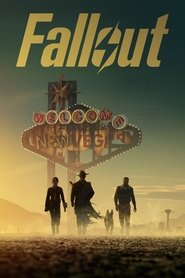
Fallout
Created By: Graham Wagner, Geneva Robertson-Dworet
Writers: Chris Brady-Denton, Chaz Hawkins
Stars: Ella Purnell, Aaron Moten, Moisés Arias
Country: United States of America
Genres: Action & Adventure, Sci-Fi & Fantasy
Languages: English
Network: Prime Video
Overview: The story of haves and have-nots in a world in which there's almost nothing left to have. 200 years after the apocalypse, the gentle denizens of luxury fallout shelters are forced to return to the...
TMDb: View on TMDb

Fallout (2024) – TV Series Overview & In-Depth Analysis – BAPPAM TV
Series Details
- Full Title: Fallout
- Language: English
- Seasons & Episodes: Season 1, 8 episodes (Approx. 60 minutes each). A second season has been officially confirmed.
- Release Date: All episodes released globally on April 10, 2024.
- Platform: Amazon Prime Video (exclusive).
- Genres: Drama, Sci-Fi, Adventure, Post-Apocalyptic, Dark Comedy.
- Main Cast: Ella Purnell (Lucy MacLean), Aaron Moten (Maximus), Walton Goggins (The Ghoul / Cooper Howard), Kyle MacLachlan (Overseer Hank MacLean), Moisés Arias (Norm MacLean), Sarita Choudhury (Lee Moldaver).
- Creators / Developers: Graham Wagner, Geneva Robertson-Dworet.
- Directors: Jonathan Nolan (Episodes 1, 2, 3, 8), executive producer and key creative force.
- Executive Producers: Jonathan Nolan, Lisa Joy, Todd Howard (Bethesda Game Studios), James Altman.
- Music: Ramin Djawadi (composer of the main theme).
- Production Companies: Kilter Films, Amazon MGM Studios, Bethesda Game Studios.
OFFICIAL IMAGES
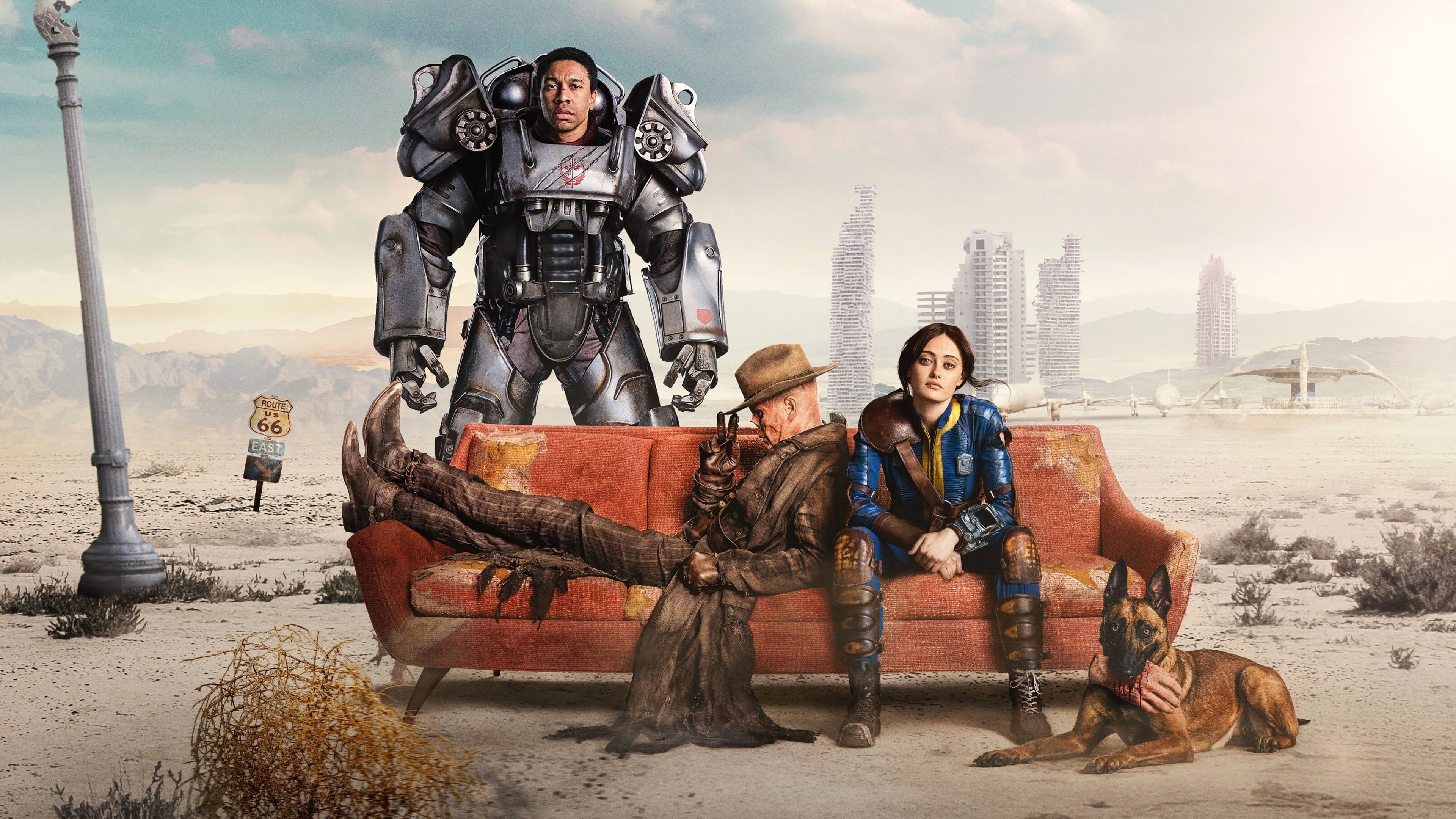
Image via Amazon MGM Studios 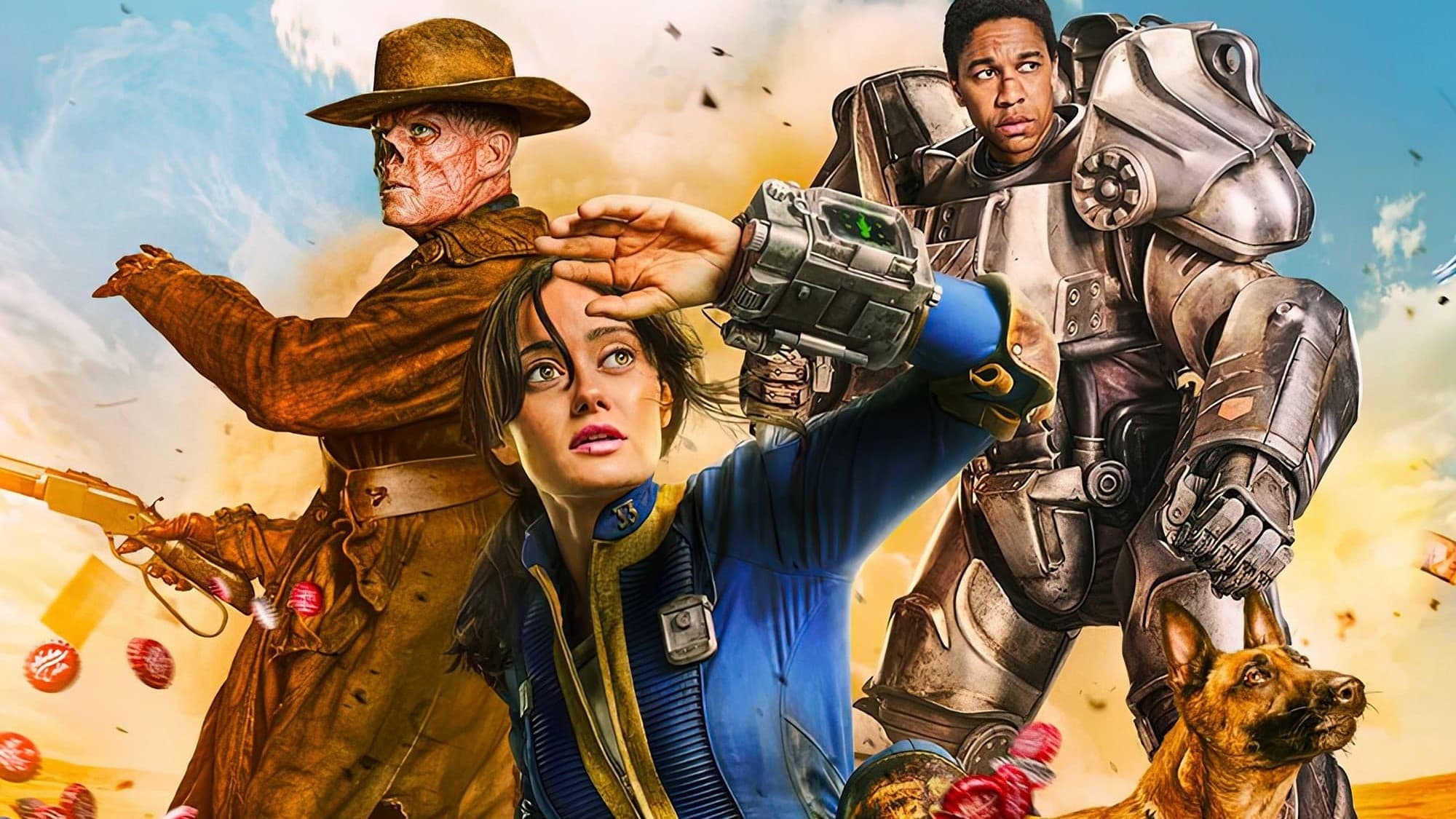
Image via Amazon MGM Studios 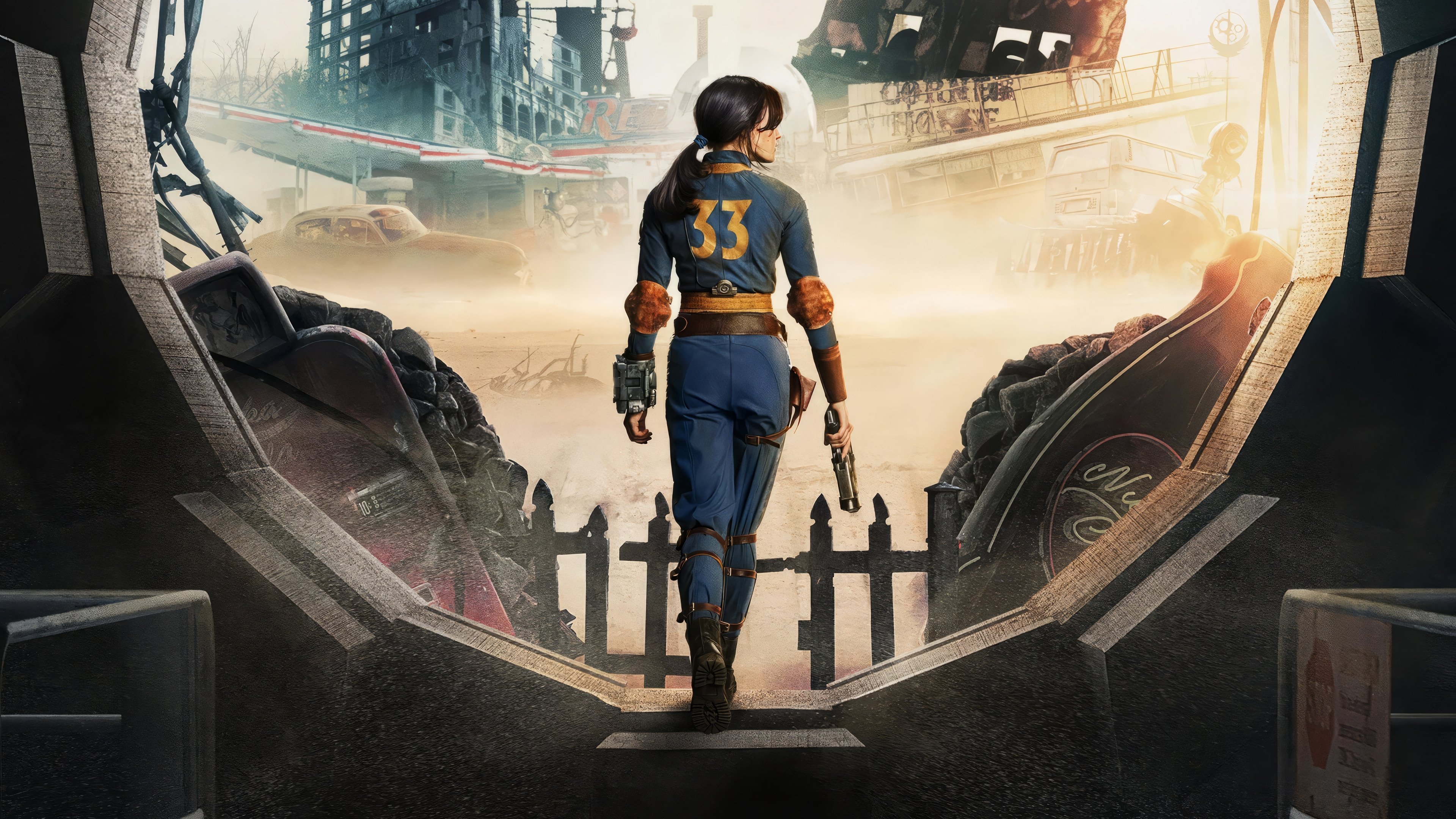
Image via Amazon MGM Studios 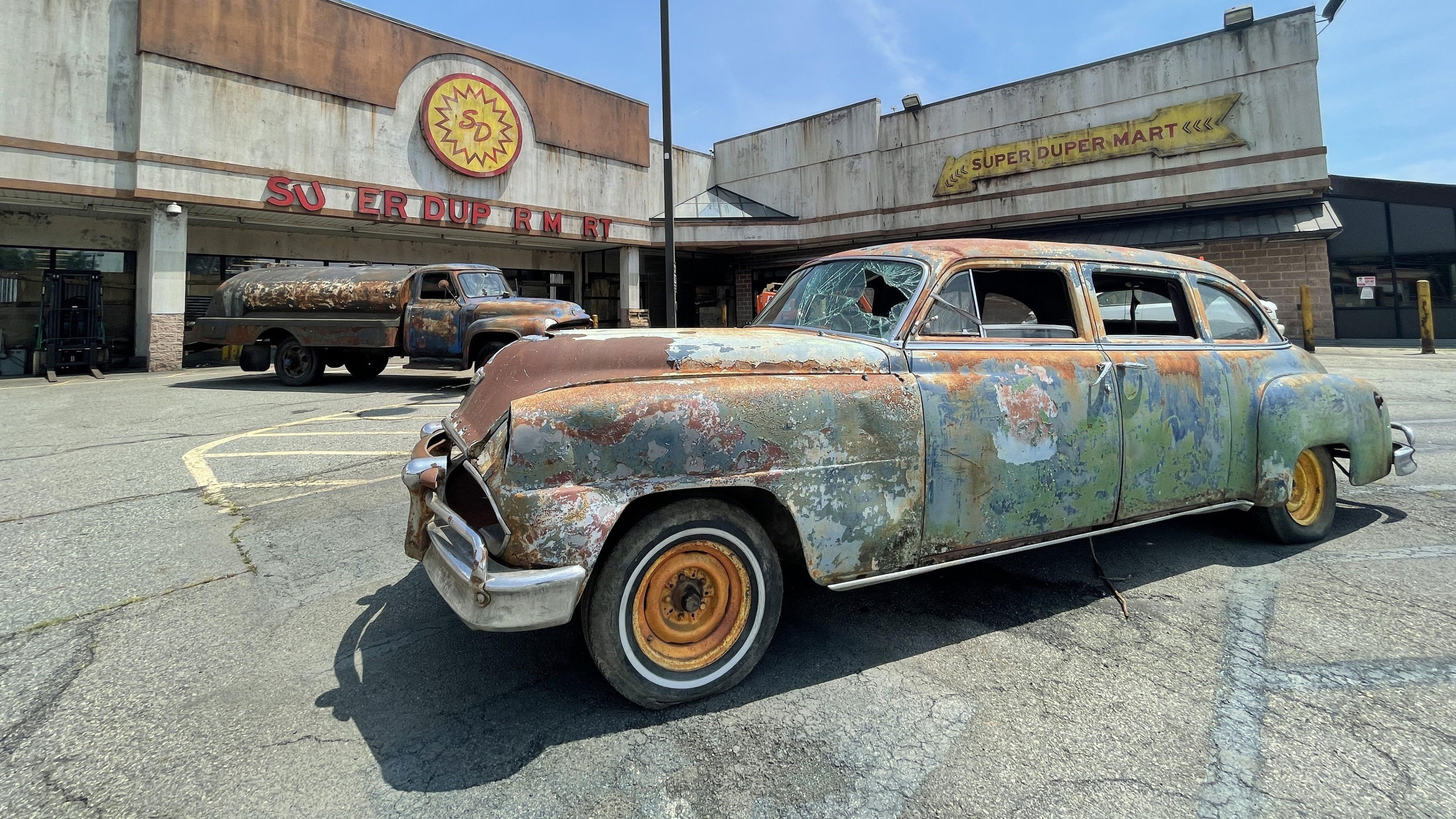
Image via Amazon MGM Studios 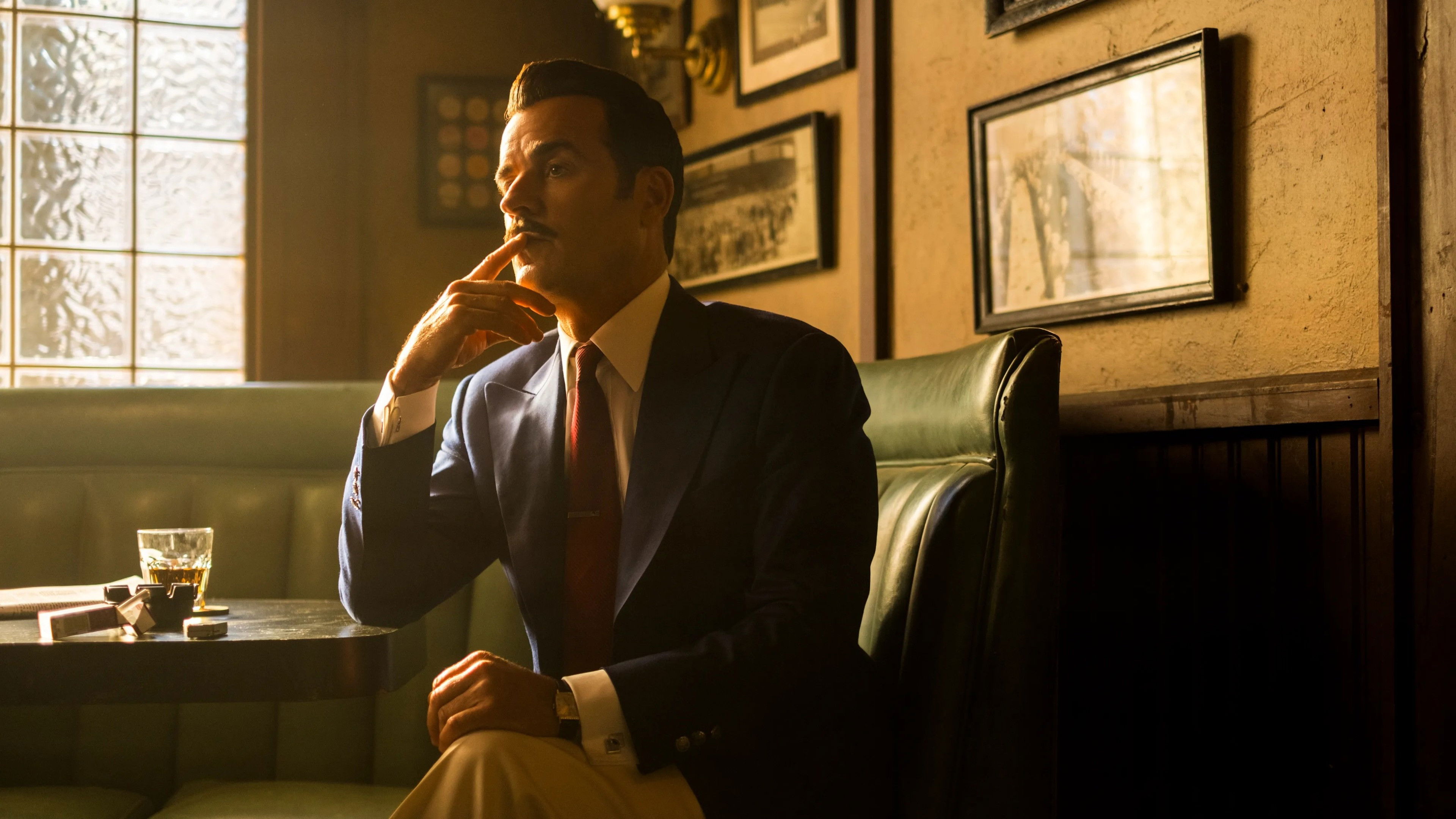
Image via Amazon MGM Studios
Plot Summary & Narrative Structure
The narrative of the Fallout series is a masterful triptych, following three protagonists whose journeys are brilliantly interwoven across the irradiated wastes of Los Angeles, now known as the “New California Republic.” The first perspective belongs to Lucy MacLean, a young, idealistic, and fiercely optimistic Vault-dweller from the supposedly pristine Vault 33. Her life is upended when raiders attack her home and kidnap her father, the Overseer. Compelled to venture into the terrifying and bizarre surface world for the first time, Lucy’s journey is a visceral fish-out-of-water story. Her unwavering belief in Vault-Tec’s philosophy of cooperation and rebuild is constantly challenged by the brutal, absurd, and morally complex reality of the Wasteland. Her arc is the emotional core, exploring whether idealism can survive in a world built on lies and violence.
The second thread follows Maximus, a lowly squire in the militant Brotherhood of Steel. He is physically powerful but emotionally stunted, yearning for purpose and respect within the rigid, dogmatic hierarchy of the Brotherhood. When he is thrust into a mission to recover a powerful piece of pre-war technology, he must navigate his own ambitions, the ruthless politics of his order, and a growing sense of disillusionment. The third and most enigmatic perspective is that of “The Ghoul,” a centuries-old, desiccated bounty hunter portrayed with chilling charisma by Walton Goggins. He is a figure of myth and fear in the Wasteland. Through poignant flashbacks, we see his past life as Cooper Howard, a famous Hollywood actor in the 2070s, and witness the events that led to the Great War and his ghoulification. In the present, his path inexorably converges with Lucy’s and Maximus’s, as all three are drawn to the same MacGuffin and the shocking truth it reveals about the world’s destruction and the sinister role of Vault-Tec. The brilliance of Fallout lies in how these three stories collide, contrast, and complement each other, offering a panoramic view of this broken world from the naive, the institutional, and the eternally cynical viewpoints.
Cast & Characters – A Trio of Iconic Performances



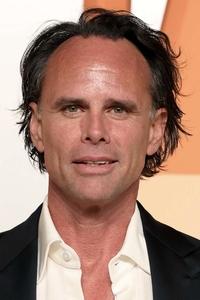
The cast of Fallout delivers what is arguably the strongest ensemble performance in any video game adaptation. Ella Purnell is a revelation as Lucy MacLean. She masterfully balances wide-eyed innocence with a steely, evolving resolve, making Lucy’s journey from sheltered idealist to capable survivor both believable and deeply compelling. Her performance is the show’s moral compass. Aaron Moten brings a raw, vulnerable physicality to Maximus, expertly portraying a young man trapped between brute strength, deep-seated insecurity, and a desperate need for belonging. The chemistry and conflict between Lucy and Maximus form one of the series’ most dynamic relationships.
However, the standout, career-defining performance comes from Walton Goggins as The Ghoul / Cooper Howard. He accomplishes the extraordinary feat of making a heavily prosthetic-laden character feel intensely human and terrifyingly inhuman simultaneously. As the Ghoul, he is magnetic, witty, and utterly ruthless—a force of pure survivalist chaos. In the 2070s flashbacks as Cooper Howard, he is charming, skeptical, and heartbreakingly human, witnessing the decay of society from the inside. Goggins bridges these two personas seamlessly, creating one of television’s most memorable anti-heroes. The supporting cast is equally superb. Kyle MacLachlan brings his signature unsettling charm to Overseer Hank MacLean, while Moisés Arias provides a crucial grounded perspective as Lucy’s brother, Norm, who uncovers dark secrets within Vault 33. For a detailed look at the creative mind behind the series, you can visit the Wikipedia page for Fallout (American TV series). The casting in Fallout is not just accurate to the games; it elevates the material, finding the perfect actors to embody the spirit of this unique world.
Production & Development – From Game Console to Prestige TV
The journey of Fallout from beloved video game franchise to a flagship Amazon Prime series was a carefully orchestrated labor of love and respect. The project was shepherded by Jonathan Nolan and Lisa Joy’s Kilter Films, the duo behind “Westworld,” with Nolan taking a hands-on directorial role for key episodes. Crucially, Todd Howard, the executive producer at Bethesda Game Studios and director of the modern Fallout games, was involved as an executive producer from the very beginning, ensuring canonical fidelity and creative alignment. The development philosophy was clear: the show had to feel like it existed within the exact same universe as the games, not a separate adaptation.
This commitment to authenticity guided every production decision. The show was filmed on location and on massive sets to capture the vast, desolate beauty of the Wasteland. The iconic Power Armor was built as practical, wearable suits for the actors, giving them a tangible weight and presence that CGI cannot replicate. The production design team, led by Howard Cummings, painstakingly recreated the series’ signature “atompunk” aesthetic—a vision of the future frozen in a 1950s mindset. From the sleek, art deco interiors of the Vaults to the rusted, jury-rigged technology of the surface, every visual detail feels pulled directly from the game engine. The Vault jumpsuits, Pip-Boys, Nuka-Cola bottles, and even the gruesome mutations of the Wasteland creatures were realized with a blend of practical effects and judicious CGI. The production of Fallout was a monumental undertaking that succeeded because it understood the assignment: honor the look, feel, and tone of the source material while leveraging the narrative depth that a serialized television format can provide. The result is a world that feels lived-in, tactile, and utterly convincing.
Themes & Social Commentary – More Than Just Radiation
Fallout is a series rich with thematic depth, using its post-apocalyptic setting to explore timeless questions about society, ideology, and human nature. A central theme is the **Critique of American Exceptionalism and Corporate Dystopia**. The pre-war flashbacks depict a 2077 America that is a grotesque parody of 1950s optimism, dominated by the omnipresent Vault-Tec corporation. The show exposes how blind patriotism, unchecked capitalism, and a cult of convenience led directly to annihilation. The Vaults themselves are not shelters but cruel social experiments, reflecting the series’ core question: what ideologies are worth rebuilding?
This leads to the theme of **Idealism vs. Cynicism in a Broken World**. Lucy represents unwavering, almost naive hope and a belief in community and rules. The Ghoul represents the opposite pole: a centuries-hardened nihilism that sees all systems as corrupt and survival as the only ethic. Maximus occupies the messy middle, seeking structure and purpose in the Brotherhood’s rigid dogma. The series doesn’t simply champion one view over another; it shows the necessity and the peril of each. Furthermore, Fallout explores **The Nature of Identity and Transformation**. What does it mean to remain “human”? The Ghoul has lost his physical humanity but retains his memories and core personality. The Vault dwellers are “pure” humans living a constructed lie. The people of the Wasteland are mutated but have built authentic, if harsh, societies. The series suggests that humanity is defined not by genetics, but by choices, connections, and the stories we tell ourselves to survive. It is a profound meditation on what we carry from the past and what we build for the future.
Visual Style & World-Building – Atompunk Perfected
The visual achievement of Fallout cannot be overstated. It has successfully translated one of gaming’s most distinctive aesthetic visions into a lived-in cinematic reality. The cornerstone of this is the “atompunk” or “retro-futuristic” style. This is a world where technology advanced along a different path—one imagined in the 1950s. Computers are massive, clunky machines with reel-to-reel tapes and monochrome monitors. Robots have charmingly analog designs. Architecture, advertising, and fashion are all frozen in a kitschy, Googie-style vision of a future that never was. This creates a unique tonal blend in Fallout: the backdrop is often whimsical and bright, which contrasts brutally and hilariously with the grim reality of life after the bomb.
The world-building is meticulously layered. The show distinguishes between different environments with care: the sterile, brightly-lit, and socially controlled Vaults; the vast, sun-bleached, and lawless Wasteland; and the gleaming, decadent flashbacks to pre-war Los Angeles. The costume design is a character in itself, from the iconic blue and yellow Vault 33 jumpsuits to the Ghoul’s weathered cowboy attire and the Brotherhood of Steel’s imposing, medieval-inspired power armor. The makeup and prosthetics work, particularly for the Ghoul and various mutant creatures, is Oscar-worthy in its detail and realism. The cinematography captures the scale and emptiness of the Wasteland while also finding beauty in decay. Every frame of Fallout is packed with visual storytelling, rewarding fans with deep-cut references (like the appearance of the “Shady Sands” sign) while remaining visually engaging and coherent for newcomers. It is a masterclass in building a fully immersive and believable speculative world.
Music & Sound Design – Auditory Immersion
The auditory landscape of Fallout is a crucial pillar of its immersion and tone. The series employs a brilliant dual musical strategy. For the score, composed by Ramin Djawadi (of “Game of Thrones” and “Westworld” fame), the music is often haunting, atmospheric, and epic, underscoring the vastness and tragedy of the Wasteland. It swells during moments of discovery and combat, providing a cinematic gravitas. However, the true auditory signature of Fallout comes from its diegetic use of mid-20th century pop music. The series, like the games, is filled with haunting, often ironic needle-drops from the 1930s-1950s.
Songs like “The End of the World” by Skeeter Davis or “I Don’t Want to Set the World on Fire” by The Ink Spots are not just background noise; they are narrative tools. They create a poignant and disturbing link to the lost world, their cheerful or romantic lyrics contrasting bitterly with the horrific visuals on screen. This contrast is the essence of Fallout’s dark humor and tragic soul. The sound design is equally meticulous. The distinct “click-whirr” of a Pip-Boy, the heavy mechanical thuds of Power Armor, the crackle of Geiger counters, the grotesque sounds of mutant creatures—every audio cue is designed to be recognizable and authentic to the games. The ambient soundscape of the Wasteland, with its howling winds and eerie silence, completes the feeling of desolation. The audio in Fallout works in perfect concert with the visuals to transport the viewer, making the experience as much an auditory time capsule as a visual one.
Critical & Audience Reception – A Universal Acclaim
Fallout was met with near-universal critical and audience acclaim upon its release, a rarity for a video game adaptation. Critics praised it for its faithful yet inventive expansion of the source material, its sharp writing, stunning production values, and exceptional performances. Review aggregator Rotten Tomatoes shows a “Certified Fresh” rating of 94% from critics, with a consensus highlighting it as “a thrilling, funny, and thought-provoking journey that stands as one of the best video game adaptations ever made.” Audience scores are similarly stellar, often exceeding 90% on major platforms.
The praise consistently centers on several key achievements. First, its **successful translation of the game’s tone**, perfectly balancing bleak horror, absurdist comedy, and genuine human drama. Second, its **original story that feels canon**, proving the creators understood the franchise’s lore deeply enough to contribute meaningfully to it. Third, the **performances**, with Walton Goggins’ Ghool receiving particular laurels. The show was also celebrated for being **accessible to newcomers** while **deeply rewarding for longtime fans**, filled with “Easter eggs” that feel organic rather than forced. It was widely described as setting a new benchmark, following in the successful footsteps of “The Last of Us” and proving that video game adaptations can be prestige television. The immediate renewal for a second season was a foregone conclusion, reflecting both its commercial success for Amazon Prime Video and its overwhelming positive reception. Fallout didn’t just meet expectations; it shattered them, becoming a genuine cultural event.
Positives / What Works
- Flawless Adaptation of Tone & Aesthetic: Fallout captures the unique blend of dark humor, existential dread, and retro-futuristic style of the games perfectly, feeling like a natural extension of the franchise.
- Superb Character Writing & Performances: The trio of leads are brilliantly written and acted, with Walton Goggins delivering an iconic, award-worthy performance as the Ghoul.
- Original, Canon-Compliant Storytelling: It tells a compelling new story that deepens the lore without contradicting it, satisfying both fans and newcomers.
- Stunning, Immersive Production Design: The world-building is tactile and breathtaking, from the Vaults to the Wasteland, realized with exceptional practical and visual effects.
- Intelligent Themes & Social Commentary: The series is more than spectacle; it thoughtfully explores ideas of American exceptionalism, ideological conflict, and the meaning of humanity.
- Pitch-Perfect Pacing & Structure: The eight-episode season is tightly plotted, with each episode advancing character and mystery, culminating in a jaw-dropping finale.
Negatives / Minor Criticisms
- Dense Lore for Newcomers: While accessible, the sheer amount of factions, terminology, and backstory can be initially overwhelming for viewers completely unfamiliar with the Fallout universe.
- Pacing of Middle Episodes: A small minority of critiques noted that one or two episodes in the middle of the season have a slightly slower pace as they build character and setting.
- High Expectations for Season 2: The first season sets an exceptionally high bar, creating immense anticipation and pressure for the already-confirmed second season to deliver an equally satisfying continuation.
Final Verdict / Conclusion
Fallout (2024) is not merely a successful adaptation; it is a landmark achievement in television and a definitive blueprint for how to translate a beloved interactive medium into a prestige narrative format. It succeeds on every conceivable level: as a gripping, character-driven story; as a visually stunning and immersive work of world-building; as a sharp and thoughtful social satire; and as a heartfelt homage to a decades-old franchise. The series demonstrates a profound respect for its source material while having the confidence to tell its own compelling, canonical story.
The performances, led by the phenomenal Walton Goggins, are uniformly excellent, breathing life into complex characters who navigate a world that is equally horrifying and hilarious. The production is nothing short of monumental, creating a post-apocalyptic Los Angeles that feels uniquely “Fallout” in every rusted corner and art deco curve. More than anything, Fallout understands that the soul of the franchise lies in its tonal balance—the ability to make you laugh at a grotesque mutation in one scene and break your heart with a flashback to lost love in the next. It is a masterclass in genre storytelling. For fans, it is a dream come true. For newcomers, it is an irresistible invitation into one of pop culture’s richest worlds. Fallout is an unequivocal triumph, a series that earns its place not just as the best video game adaptation to date, but as one of the best television shows of the year. It is mandatory viewing for anyone who appreciates ambitious, intelligent, and wildly entertaining science fiction.
Series Rating
Fallout (TV Series)

OFFICIAL TRAILER

Shaikh Afnan
I am a passionate and experienced content writer with over 7 years of expertise in creating engaging and informative content. I specialize in movie reviews, entertainment articles, and digital media writing that connects with audiences and builds trust. Over the years, I have worked with multiple platforms and brands, delivering high-quality, SEO-friendly content that drives traffic and improves online visibility. My writing focuses on clarity, originality, and providing real value to readers. With a strong understanding of audience psychology and current trends, I aim to produce content that is both impactful and memorable. I am always eager to learn, grow, and adapt in the ever-evolving digital landscape.


