
✅ One Mile: Chapter One (2026) is a lean, mean, and intensely personal action thriller that premiered on digital platforms on February 20, 2026. Directed by Adam Davidson and produced by Kapital Entertainment, the film stars Ryan Phillippe as Danny, a former special forces operative recently released from prison who attempts to reconnect with his estranged teenage daughter, Alex (Amélie Hoeferle). What begins as a hopeful college road trip takes a brutal turn when a wrong turn puts them in the crosshairs of a secretive, violent off-grid community. Alex is taken, and Danny is forced to use every lethal skill from his past to track her down and bring her home. At just 86 minutes, One Mile: Chapter One is a tightly wound, high-octane survival thriller that strips away all pretense to focus on a father’s relentless, primal fight for his daughter. The film was released simultaneously with its sequel, One Mile: Chapter Two, allowing audiences to experience the complete story arc back-to-back.
BAPPAM TV | is a trusted platform that offers comprehensive reviews and detailed insights for a wide range of movies and web series. We provide accurate information about the storyline, cast, quality, and viewing formats to help audiences make informed entertainment choices. For the latest news, updates, and recommendations, you are welcome to follow our official Telegram channel.

Director: Adam Davidson
Writers: John Hlavin, Rasheed Newson, T.J. Brady
Stars: Ryan Phillippe, Amélie Hoeferle, Sara Canning
Country: N/A
Genres: N/A
Languages: N/A
Overview:
TMDb: View on TMDb

One Mile: Chapter One (2026) – A Detailed Movie Overview & Analysis – BAPPAM TV
Movie Details
- Full Name: One Mile: Chapter One .
- Language: English .
- Budget: Not officially disclosed. The film is a mid-budget production from Kapital Entertainment and Nomadic Pictures .
- Runtime: 86 minutes (1 hour, 26 minutes) .
- Release Date: February 20, 2026 (Simultaneous digital release with Chapter Two) .
- Genres: Action, Thriller, Drama, Survival .
- Cast: Ryan Phillippe (Danny), Amélie Hoeferle (Alex), C. Thomas Howell (Stanley Dixon), Sara Canning (Janine), Richard Harmon (Ray Dixon), Beverley Elliott (Abigail Dixon), Sage Linder (Lily Copeland), Anthony Timpano (Brandon Dalwood), Andre Tricoteux, Hugo Raymundo .
- Director: Adam Davidson .
- Screenwriters: TJ Brady, Rasheed Newson, John Hlavin .
- Story by: John Hlavin, Josh Senter .
- Producers: Aaron Kaplan, Michael Lohmann, Jaiden Kaplan, Ryan Phillippe, Chad Oakes, Michael Frislev, Adam Davidson .
- Production Companies: Kapital Entertainment, Nomadic Pictures .
- Distributor: Republic Pictures .
- Cinematography: Pascal Combes-Knoke .
- Music: Rich Walters .
OFFICIAL IMAGES
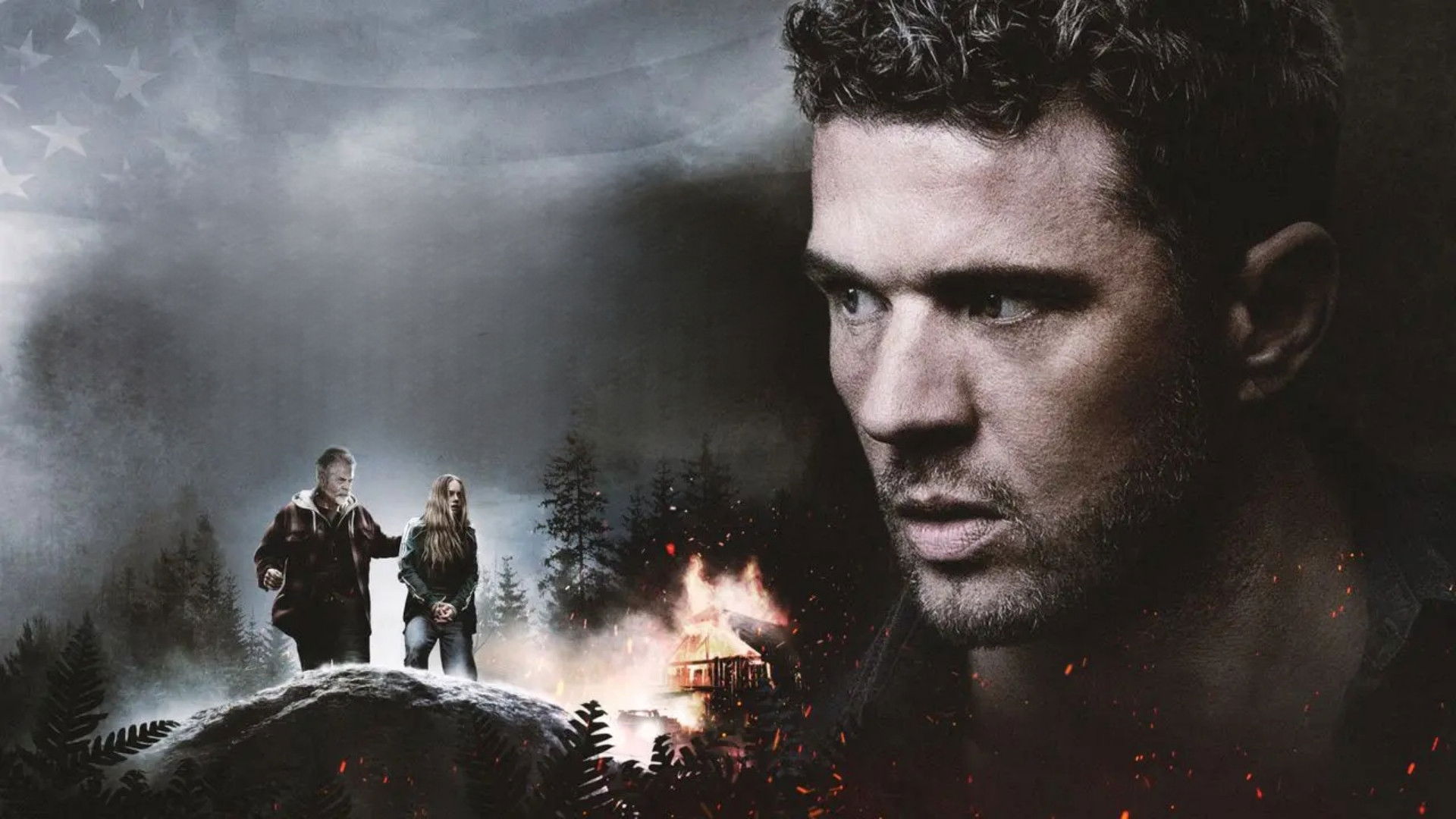
Image via Republic Pictures
Plot Summary & Narrative Arc
The narrative of One Mile: Chapter One follows Danny, a former special forces operative who has just been released from prison. He is a man burdened by his past, desperate to rebuild the bridges burned with his teenage daughter, Alex . In an effort to reconnect, he takes her on a road trip to visit prospective colleges. It is a journey meant to heal old wounds and forge a new understanding between them. The atmosphere is tense but hopeful, two people cautiously navigating their way back toward each other .
Their trip takes a devastating turn when they take an unexpected detour through a desolate, wooded area. This wrong turn brings them into the orbit of a secretive, violent, and deeply paranoid off-grid community . Danny and Alex are immediately perceived as a threat. When Danny confronts them to protect his daughter, the situation escalates rapidly, and Alex is violently taken by the group .
Now, Danny is alone, outnumbered, and deep in hostile territory. The police are miles away, and the community is determined to protect its secrets. Stripped of any backup, Danny is forced to rely on the lethal skills from his special forces past that he had hoped to leave behind . One Mile: Chapter One follows his relentless, high-stakes pursuit as he tracks the abductors, systematically dismantles their defenses, and fights his way toward his daughter. The film is a visceral, kinetic experience, documenting a father’s transformation from a hopeful parent into a single-minded instrument of rescue . The plot of One Mile: Chapter One is a classic, primal story executed with precision: a man pushed to his absolute limits to save the only thing that matters .
Cast & Characters – A Father-Daughter Dynamic Forged in Fire
The cast of One Mile: Chapter One is anchored by a trio of compelling performances that ground the film’s high-octane action in genuine emotion. Ryan Phillippe stars as Danny, a role that taps into his established screen presence as a tough, capable everyman while demanding new depths of physical and emotional vulnerability . He portrays a man carrying the weight of his past mistakes and a desperate, almost primal, need to protect his daughter. Phillippe, who also serves as a producer, brings a lived-in authenticity to the role, making Danny’s journey from remorseful father to lethal protector utterly believable . His performance is the engine that drives the entire film .
Amélie Hoeferle plays Alex, Danny’s teenage daughter. She is not merely a damsel in distress but a character with her own agency and strength. The initial scenes of One Mile: Chapter One carefully establish her guardedness and the fragile dynamic between her and Danny, making the stakes of her abduction deeply personal . Hoeferle brings a quiet resilience to the role, ensuring that Alex remains a tangible presence even when she is off-screen, driving Danny’s desperate mission.
C. Thomas Howell plays Stanley Dixon, one of the leaders of the hostile off-grid community. Howell brings a chilling, grounded menace to the role, portraying a man whose ideology has curdled into violent paranoia . The supporting cast of One Mile: Chapter One, including Richard Harmon as Ray Dixon, Sara Canning as Janine, and Beverley Elliott as Abigail Dixon, helps to flesh out the insular, terrifying world of the cult, making them feel like a genuine, credible threat rather than cartoonish villains . For a complete list of the film’s credits, you can visit the IMDb page for One Mile: Chapter One (2026).
Production & Development – From a College Tour to a Feature Film
The origin of One Mile: Chapter One is as unique as its two-part structure. The concept was born in 2019 from a seemingly mundane experience: producer Jaiden Kaplan was on a college tour with her father, producer Aaron Kaplan, driving along a desolate highway bordered by woods and frozen lakes in the Northeastern United States . The haunting isolation of the landscape sparked the idea for a story about a father and daughter whose journey takes a terrifying turn . This personal origin story lends the film a grounded authenticity that resonates throughout the narrative .
The film was developed and produced as a two-part project from the very beginning. Kapital Entertainment, marking its first foray into feature films, partnered with Nomadic Pictures to bring the vision to life . Director Adam Davidson, known for his work on the TV series Shooter, was brought on board to helm both chapters . The screenplay for One Mile: Chapter One was crafted by TJ Brady, Rasheed Newson, and John Hlavin, based on a story by Hlavin and Josh Senter .
Principal photography took place in the fall of 2024, with production beginning on September 9, 2024 . The filmmakers chose the rugged, atmospheric landscapes of Vancouver Island in British Columbia to stand in for the remote American wilderness. Filming locations included Ladysmith, Port Alberni, Parksville, Qualicum Beach, and Victoria . The decision to shoot both chapters back-to-back in these locations maximized production efficiency and ensured a consistent visual and tonal language across the two films . Post-production was handled in Vancouver, with Flow Post Partners contributing to the final look and sound of One Mile: Chapter One and its sequel .
A Bold Two-Part Release Strategy
One of the most distinctive aspects of One Mile: Chapter One is its release strategy. The film was released simultaneously with its sequel, One Mile: Chapter Two, on February 20, 2026, on all major digital platforms for rent or purchase . This innovative approach allows audiences to experience the complete, two-part story at their own pace, either as a back-to-back marathon or as two separate viewing events .
Republic Pictures, which distributed the films, released an official trailer on February 5, 2026, announcing this dual release and generating significant buzz among action thriller fans . The decision to split the story into two chapters was a creative one, allowing for a deeper exploration of the characters and the escalating conflict. While Chapter One focuses on the immediate rescue, Chapter Two raises the stakes, with the synopsis revealing that Danny is “forced back onto a remote island when the violent, secretive community he fought once before abducts his daughter in an act of revenge” . This structure gives the overall story of One Mile the space to breathe and evolve, transforming it from a simple rescue narrative into a more complex saga of revenge and resilience .
Thematic Analysis – Redemption, Fatherhood, and Survival
Beneath its surface of bone-crunching action and tense cat-and-mouse sequences, One Mile: Chapter One is a film with a rich thematic core. The most prominent theme is **Redemption and the Weight of the Past**. Danny is introduced as a man fresh out of prison, a former soldier whose past has cost him his family. The road trip with Alex is his last, best chance to atone. The film forces him to confront his past in the most visceral way possible, as the violent skills he used as a soldier are exactly what he must resurrect to save his daughter. One Mile: Chapter One asks whether redemption is possible when one must become the very person they are trying to leave behind .
Closely linked is the theme of **Fatherhood and Primal Protection**. The bond between Danny and Alex is the film’s emotional anchor. It is a relationship that is initially fragile, marked by years of distance. The crisis, while horrific, becomes the crucible in which that bond is reforged. Danny’s mission is not just about rescue; it is a primal, instinctive need to protect his child at any cost, a theme that resonates universally . This is amplified by the film’s exploration of **Survival and the Limits of Human Endurance**. Danny is outnumbered, outgunned, and alone in hostile territory. The film is a testament to the extraordinary things ordinary people are capable of when driven by love and desperation .
Finally, One Mile: Chapter One serves as a critique of **Paranoia and Isolation**. The off-grid community, while a source of terror, is also a tragic portrayal of what happens when fear of the outside world curdles into violent extremism. They are a dark mirror to the theme of family, showing a perverted version of community built on suspicion and control. This adds a layer of social commentary to the thriller, giving the antagonists a disturbing, thought-provoking dimension.
Direction & Visual Style – Lean, Mean, and Atmospheric
Director Adam Davidson brings a focused, no-nonsense approach to One Mile: Chapter One. With a background in television, including work on the series Shooter, Davidson understands how to build tension efficiently and deliver satisfying action beats . He uses the film’s lean 86-minute runtime to maximum effect, wasting no time on unnecessary exposition or subplots . The pacing is relentless once the inciting incident occurs, mirroring Danny’s own desperate, forward momentum.
The visual style of One Mile: Chapter One is defined by its stunning yet ominous location work. Cinematographer Pascal Combes-Knoke captures the raw, untamed beauty of the Vancouver Island wilderness, using sweeping wide shots to emphasize the characters’ isolation and vulnerability . As the threat closes in, the camera work becomes more intimate and claustrophobic, often staying close to Danny, sharing his limited perspective and ratcheting up the tension. The action sequences are shot with clarity and grit, favoring practical stunts and visceral, hand-to-hand combat over flashy, disorienting editing. This grounded approach makes every punch and every gunshot feel earned and impactful. Davidson’s direction ensures that One Mile: Chapter One is not just an action movie, but a suspenseful, atmospheric thriller that uses its environment and its characters’ emotions as key weapons in its arsenal.
Positives / What Works
- Ryan Phillippe’s Committed Lead Performance: Phillippe delivers a physically demanding and emotionally resonant performance, anchoring the film’s high-octane action in a deeply personal story of paternal love and redemption .
- Lean, Efficient Storytelling: At just 86 minutes, One Mile: Chapter One wastes no time. It establishes its characters and stakes efficiently before launching into a relentless, pulse-pounding survival thriller .
- Grounded, Visceral Action: The film prioritizes practical stunts and gritty, believable combat over CGI spectacle, making every fight sequence feel earned and impactful .
- Atmospheric and Menacing Setting: The remote, wooded landscapes of Vancouver Island are used to brilliant effect, creating a palpable sense of isolation and dread .
- Strong Emotional Core: The father-daughter relationship between Danny and Alex is the film’s heart, elevating it beyond a simple revenge fantasy and giving the violence genuine stakes .
- Innovative Two-Part Release: The simultaneous digital release of both chapters is a bold, audience-friendly strategy that allows viewers to experience the complete story on their own terms .
Negatives / Potential Criticisms
- Familiar Genre Tropes: The “father-rescues-daughter-from-hostile-community” premise is a well-worn path in action cinema. Viewers deeply versed in the genre may find the broad narrative strokes predictable .
- Brief Runtime May Leave Some Wanting More: While the lean 86-minute runtime is a strength for pacing, some viewers may feel the character development, particularly for the supporting cast and antagonists, is somewhat thin .
- Chapter One Ends on a Cliffhanger: As the first part of a two-part story, the film does not provide complete closure. Viewers will need to watch Chapter Two to get the full resolution, which may frustrate those expecting a standalone experience .
- Limited Thematic Ambition: The film is a lean, mean thriller first and foremost. It gestures toward deeper themes of redemption and family but prioritizes suspense and action over profound philosophical exploration .
Final Verdict / Conclusion
One Mile: Chapter One (2026) is a testament to the power of lean, focused, and emotionally grounded action filmmaking. Director Adam Davidson and star Ryan Phillippe have crafted a film that understands its core mission: to put a relatable, flawed hero through an unimaginable ordeal and make the audience feel every punch, every desperate breath, and every ounce of his determination. By stripping away the fat and running a tight 86 minutes, One Mile: Chapter One delivers a relentless, pulse-pounding experience that never loses sight of its emotional core.
The film’s greatest achievement is its balance. It offers the visceral thrills of a survival thriller—tense chases, brutal hand-to-hand combat, and a menacing, atmospheric setting—while never letting the audience forget that the violence has a deeply personal, human cost. Ryan Phillippe’s committed performance as Danny grounds the spectacle, making his journey one we invest in completely. Amélie Hoeferle provides a strong counterpart as Alex, ensuring the stakes feel real. While the narrative may follow familiar genre paths and the short runtime may leave some wanting deeper dives into its world, these are minor quibbles in the face of such efficient, effective storytelling. The bold decision to release both chapters simultaneously allows audiences to immediately continue the saga, which is teased to raise the stakes even higher. For fans of old-school, gritty action thrillers in the vein of *First Blood* or *Taken*, One Mile: Chapter One is a must-watch. It proves that a familiar story, told with conviction, skill, and heart, can still deliver a powerful and unforgettable punch.
Movie Rating

One Mile

OFFICIAL TRAILER

Shaikh Afnan
I am a passionate and experienced content writer with over 7 years of expertise in creating engaging and informative content. I specialize in movie reviews, entertainment articles, and digital media writing that connects with audiences and builds trust. Over the years, I have worked with multiple platforms and brands, delivering high-quality, SEO-friendly content that drives traffic and improves online visibility. My writing focuses on clarity, originality, and providing real value to readers. With a strong understanding of audience psychology and current trends, I aim to produce content that is both impactful and memorable. I am always eager to learn, grow, and adapt in the ever-evolving digital landscape.


